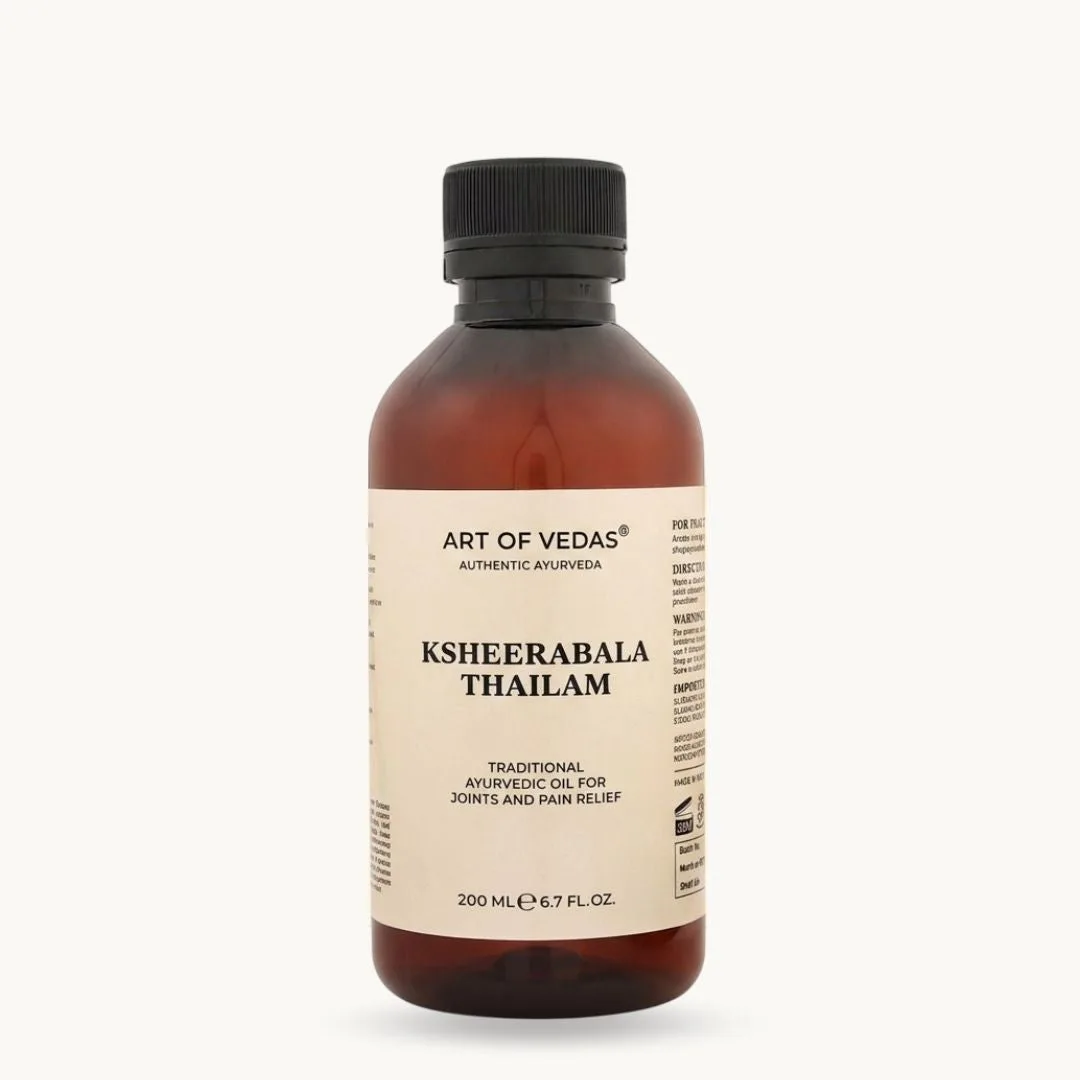
Ksheerabala 101 hører til de mest særegne præparater i det klassiske ayurvediske apotek, og til de oftest misforståede. Tallet betegner hverken en model eller en styrkegrad i moderne forstand; det tæller Avartana, altså gentagelserne af den klassiske kogecyklus, som olien har været igennem. Denne guide forklarer, hvad den forarbejdning indebærer, hvorfor det færdige præparat måles i dråber, og hvordan det adskiller sig fra den velkendte massage-Thailam.
Hvad Avartana betyder
Én Avartana er én fuld runde af den klassiske metode: baseolien koges endnu en gang med friskfremstillet Bala-afkog, paste og mælk, langsomt, indtil væsken er væk, og olien står tilbage. I en almindelig Ksheerabala Thailam sker det én gang. I et 101-præparat gentages cyklussen, klassisk hundrede og én gange, og hver runde begynder forfra med friskt afkog. Foretagendet måles i ugers arbejde og en stor vægt af urter for et lille udbytte af færdig olie, og netop derfor forbeholder traditionen det til de præparater, den holder særligt højt.
Hvorfor gentage kogningen hundrede og én gange?
Traditionens ræsonnement er ligetil: hver cyklus beder olien om at optage egenskaberne fra en frisk tilberedning af Bala (Sida cordifolia, den styrkende rod i formlens midte), så gentagelserne koncentrerer urtens karakter langt ud over det, en enkelt kogning opnår. Tekster betragter sådanne gentagne olier som forfinede, kraftige og hurtige til at brede sig, og det ulige tal bærer den ældre skik med at fuldende lykkevarslende tællinger. Praktisk set er følgen det afgørende: en 101-olie er ikke længere en vare til massageskålen, men et koncentreret klassisk præparat, traditionelt indtaget i dråber under vejledning af en behandler.
Dråber, olie eller kapsler: at læse formaterne
Den moderne hylde præsenterer Ksheerabala-idéen i tre skikkelser, og de kan ikke bruges i flæng. Den almindelige Thailam er massageolien, brugt rundhåndet og udvortes, som beskrevet i vores komplette guide til Ksheerabala. Ksheerabala 101 er det koncentrerede Avartana-præparat, målt i dråber, og dets brug og dosering hører til i professionelle hænder. Kapsler, en bekvemmelighed fra de seneste årtier, indeslutter små mål af den forarbejdede olie i en blød kapsel; de svarer til den samme tradition i bærbar form, og igen afgør behandleren, om og hvordan de passer ind i et forløb. Den samme logik i valget mellem klassiske formater er behandlet bredere i vores sammenligning af Churna, Vati og kapsel.
Mødt med respekt tilbyder Avartana-traditionen:
- Et indblik i det klassiske apoteks mest tålmodige håndværk
- Et præparat, hvis lille dosis ærer ugers gentagen kogning
- En klar arbejdsdeling mellem massageolier og dråbevise klassikere
- En tradition for faglig vejledning, der beskytter brugeren
Ksheerabala 101 og Dhanwantharam 101
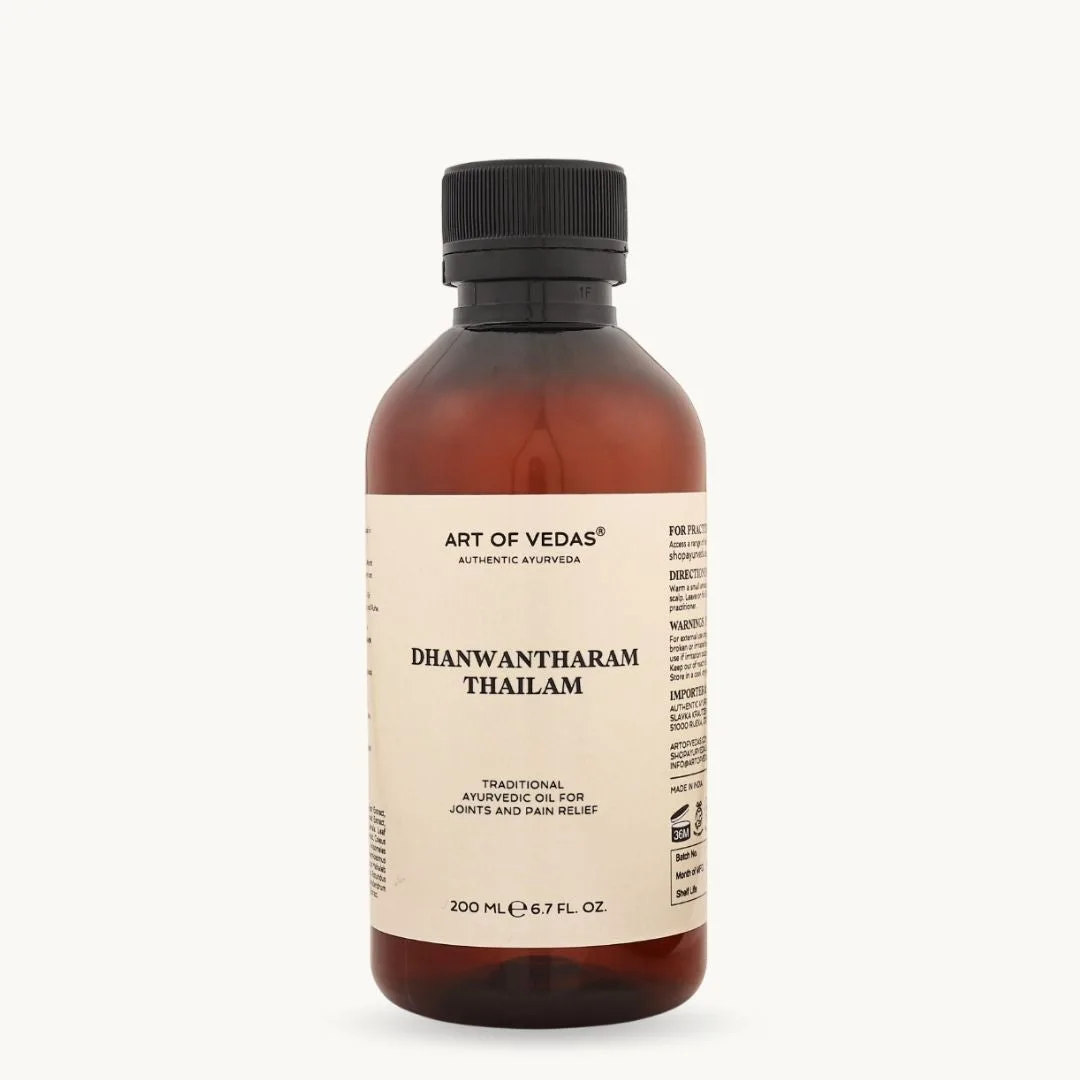
Ksheerabala er ikke den eneste formel, der æres med den fulde Avartana. Apoteker fremstiller Dhanwantharam 101 på samme vis og gentager cyklussen over den store Vata-formel frem for over den sparsomme Bala-opskrift. De to koncentrater står side om side i klassisk praksis, hver med karakteren fra sin moderolie; vores guide til Dhanwantharam 101 Avartana beskriver søskendepræparatet. Hvilket af de to, der eventuelt hører hjemme i et individuelt forløb, er netop det slags spørgsmål, traditionen lægger hos en behandler frem for på en hylde.
Ofte stillede spørgsmål
Hvad er forskellen på Ksheerabala Thailam og Ksheerabala 101?
Opskriften er den samme; forarbejdningen er det ikke. Thailam går én gang gennem den klassiske kogning og tjener som massageolie. 101 er kogt om igen med friskt afkog gang på gang, klassisk hundrede og én gange, hvilket giver et koncentrat, der traditionelt tages i dråber under faglig vejledning frem for at blive lagt på i håndfulde.
Hvorfor tages Ksheerabala 101 i dråber frem for i milliliter?
Fordi den gentagne Avartana koncentrerer præparatet, måler traditionen det, som man måler kostbare ting: dråbe for dråbe, efter en behandlers anvisning. Den lille dosis er ikke en markedsføringsgestus, men den praktiske følge af, hvor mange urter og hvor meget arbejde der står bag hver flaske.
Kan jeg bruge Ksheerabala 101 til massage?
Intet forbyder olie at møde hud, men det ville være en ødsel fejlanvendelse. Massage kræver rundhåndede mængder af et mildt præparat, og det er præcis, hvad den almindelige Thailam leverer. 101 findes til den dråbevise tradition; at bruge den til Abhyanga svarer til at lave mad på en sjælden årgang.
Er kapsler det samme som dråberne?
Kapsler bærer små mål af den forarbejdede olie i en bekvem skal, og mange finder dem behagelige på rejsen. De hører til den samme tradition, men er et moderne format; om dråber eller kapsler passer i et givet forløb, og i hvilket mål, er en vurdering for den behandler, der kender personen.
Er Ksheerabala 101 vegansk?
Nej. Hver Avartana-cyklus fornyer det mælkeafkog, som Ksheerabala har navn efter, og det færdige præparat kan derfor ikke skilles fra mejeriforarbejdning. Det siger vi ligeud af hensyn til læsere, der undgår animalske produkter, så valget kan træffes på fuldt oplyst grundlag før ethvert køb.
Kosttilskud er ikke en erstatning for en varieret, afbalanceret kost og en sund livsstil. Denne artikel beskriver traditionel ayurvedisk sammenhæng med et oplysende formål og udgør ikke lægelig rådgivning. Rådfør dig altid med en kvalificeret fagperson før enhver indvortes brug, især hvis du er gravid, ammer eller er i lægelig behandling.