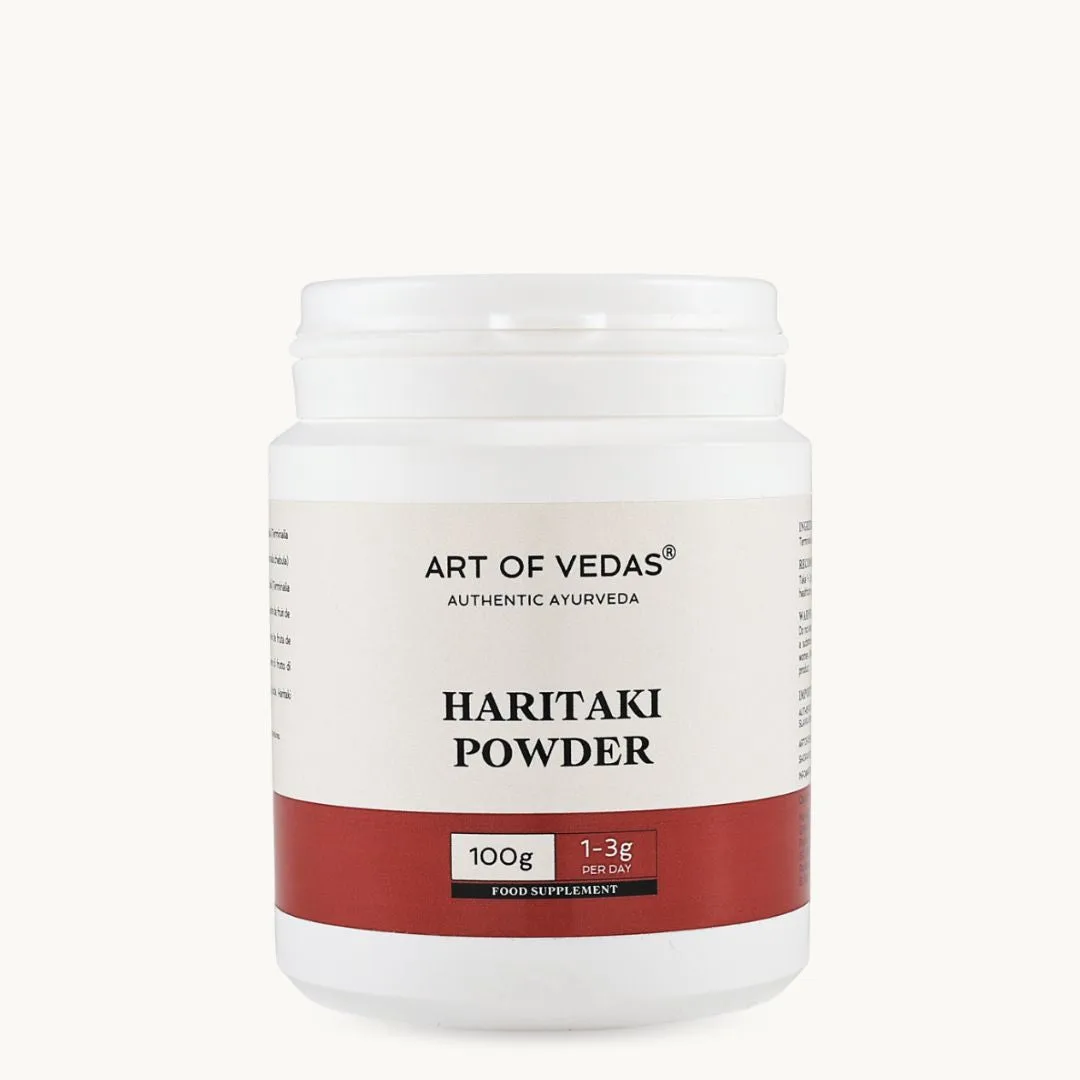
Haritaki powder is the single-herb staple many people keep at the front of their Ayurvedic cupboard. It is the dried, ground fruit of Haritaki, the herb also known as Harad, and it has been used in classical households for generations. This guide from Art of Vedas focuses on the practical side, how the powder is traditionally taken, what to expect from its taste, and the classical cosmetic customs that surround it.
The classical fruit behind the powder
Haritaki is the fruit of Terminalia chebula, so admired in the classical texts that they crowned it the king of herbs and counted it among the great Rasayana. The fruit is dried and milled into a fine powder, which is the most traditional way to keep it. For the fuller story of the fruit, its names and its reputation, see our guide to Harad, the king of herbs, and for the common naming question, our short piece on whether Harad and Haritaki are the same herb.
What to expect from the taste
Haritaki is famous for carrying five of the six classical tastes, with astringency leading. In practice this means the powder is markedly astringent, with bitter and other notes behind it, and it is not a sweet or mild flavour. Many people find that stirring it into warm water softens the experience, and the astringent character is part of why tradition values the fruit. Knowing what to expect makes the first taste far less surprising.
How the powder is traditionally taken
The classic method is simple. A small measure of the powder is stirred into warm water and taken, often in the evening as part of a settling routine. Ayurveda also has an elegant tradition of pairing Haritaki with different carriers, known as anupana, according to the season, which is a subject a practitioner can explain in detail. The amount is a matter for the product label and for individual guidance.
Traditionally, Haritaki powder has been valued for the following:
- Supporting comfortable digestion as part of a daily routine
- Encouraging regularity and easy elimination in the classical sense
- Its place among the Rasayana botanicals taken for general wellbeing
- Use as one of the three fruits within the classic Triphala blend
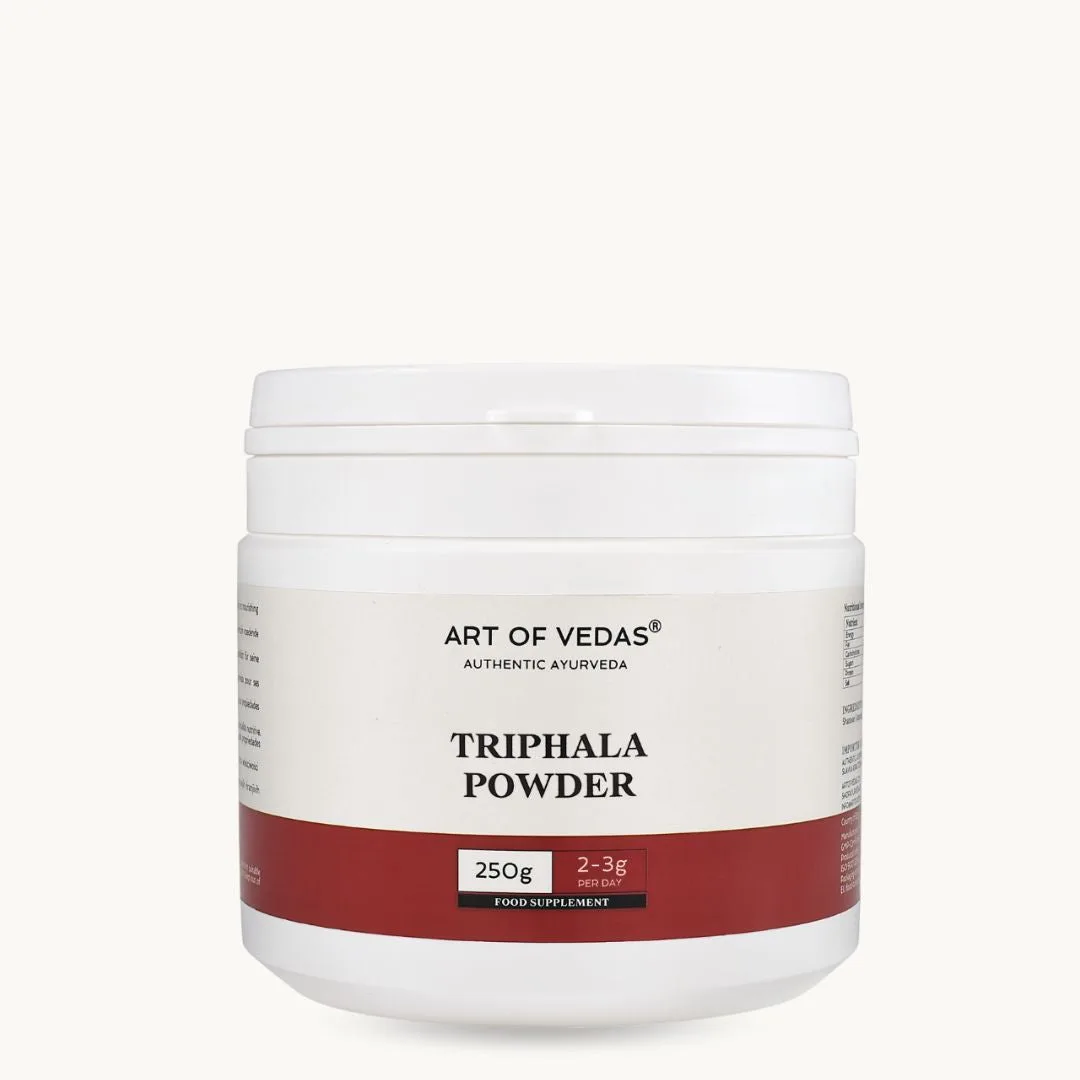
Our Haritaki powder follows the classical single-herb preparation. Those who prefer the three-fruit blend often keep Triphala powder alongside it, in which Haritaki is one of the three fruits.
The cosmetic hair-rinse custom
Beyond its use as a powder taken by mouth, Haritaki has a long cosmetic tradition. In many households the powder has been steeped in water and used as a hair rinse, a classical beauty custom valued for the feel it gives the hair and scalp. Used this way it belongs to the world of grooming and self-care rather than anything taken internally, and it is a pleasant way to enjoy the astringent fruit externally.
To understand the powder format across the whole materia medica, see our guide to classical Churnam.
Who reaches for Haritaki powder
Haritaki powder appeals to those who enjoy the classical single-herb tradition and who like a warming, astringent botanical in a daily routine. It is chosen by preference and long custom rather than by diagnosis. Individual constitution, or Prakriti, and the season both shape how it suits a person, and a qualified Ayurvedic practitioner is the right guide for personal use.
Frequently Asked Questions
How is Haritaki powder taken?
Most often a small measure is stirred into warm water and taken, frequently in the evening. The product label is the reference for the amount used.
What does Haritaki powder taste like?
It is markedly astringent, with bitter and other notes behind it. Warm water helps soften the experience.
Can Haritaki powder be used on the hair?
Yes. A classical cosmetic custom steeps the powder in water for use as a hair rinse, valued for the feel it gives the hair and scalp.
Is Haritaki the same as the Haritaki in Triphala?
Yes. The Haritaki in Triphala is the same fruit sold on its own as Haritaki powder.
When is Haritaki traditionally taken?
Tradition often favours the evening, and pairs the fruit with different carriers by season. A practitioner can advise on the classical anupana customs.
"This product is a food supplement and not intended to diagnose, treat, cure or prevent any disease."